Full Review with Sample Photos
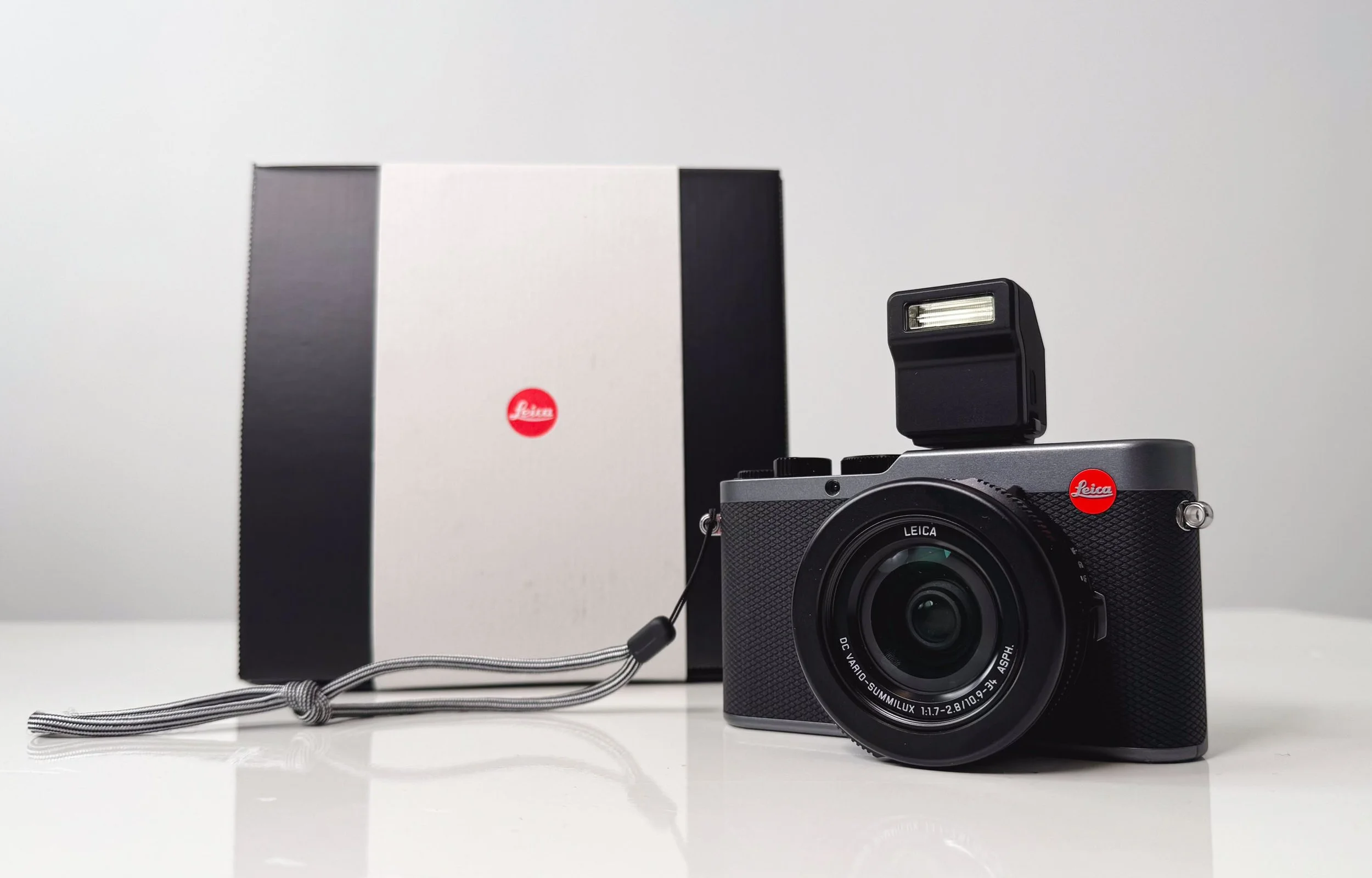
I’ve been dying to try out a Leica camera my entire life. They’ve always felt slightly out of reach and out of budget, especially if you’re considering the specs and technical aspects versus other camera brands. I’ve always heard that you’re really just paying extra for the design and the “hype” around the Leica brand. The name has been around since the late 1800s and there isn’t a photographer out there who hasn’t heard of the brand. Is it essentially the Porsche of cameras, known for their stunning design and immaculate build. I recently had the opportunity to try out a Leica D-Lux 8, a pocket-sized luxury point and shoot camera, and it did not disappoint. I’m so excited to share what I’ve discovered about Leica cameras and 5 reasons why I actually loved shooting with this camera! I’m also going to share a little about how this compares to other popular point-and-shoot cameras in the same ballpark, like the Canon G7 X Mark II, Ricoh GR IIIx and the Sony RX100 VII.


5 REASONS WHY THE LEICA D-LUX 8 STANDS OUT AMONGST POINT AND SHOOT DIGITAL CAMERAS
THE 24-75MM F/1.7 ZOOM LENS
My ideal zoom length for lenses is 24-75mm so I felt right at home with this focal length. My main camera is a 5D Mark IV with the Canon 24-75mm f/2.8 L II lens and it’s an incredibly versatile set-up, especially for traveling, weddings, fashion and pretty much any situation. It’s perfect for capturing wide shots of buildings and architecture at 24mm, which is great if you’re a travel or street photographer. Or you can capture beautiful portraits at 75mm and get a gorgeous background bokeh. While some other point and shoot cameras like the Sony RX100 VII have a much more intense zoom range (24-200mm), I sometimes just find it unnecessary unless you really want to capture things that are super far away. Most of the time though, by the time the zoom lens is finally extended, you’ve missed the shot. With the Leica D-Lux 8 though, it’s kind of my ideal lens that I’d want in a point and shoot camera because I am so used to it and because it’s an easy transition for me if I’m jumping between cameras.
It also beats out the other cameras in this category because of the wide f/1.7 aperture that the D-Lux 8 lens is capable of. I love shooting with my lenses wide open, so the brighter the better, in my opinion. It even tops the f/1.8 lens on the highly coveted Canon G7X Mark II. Lenses are the most important thing on a camera if you’re trying to achieve professional-looking photos. An f/1.7 lens vs. a lens that only goes as wide as f/3.5-4.5 for example, can greatly affect how much you can impress your friends and family with your pro level images, regardless of the sensor size.
IT’S INCREDIBLY INTUITIVE
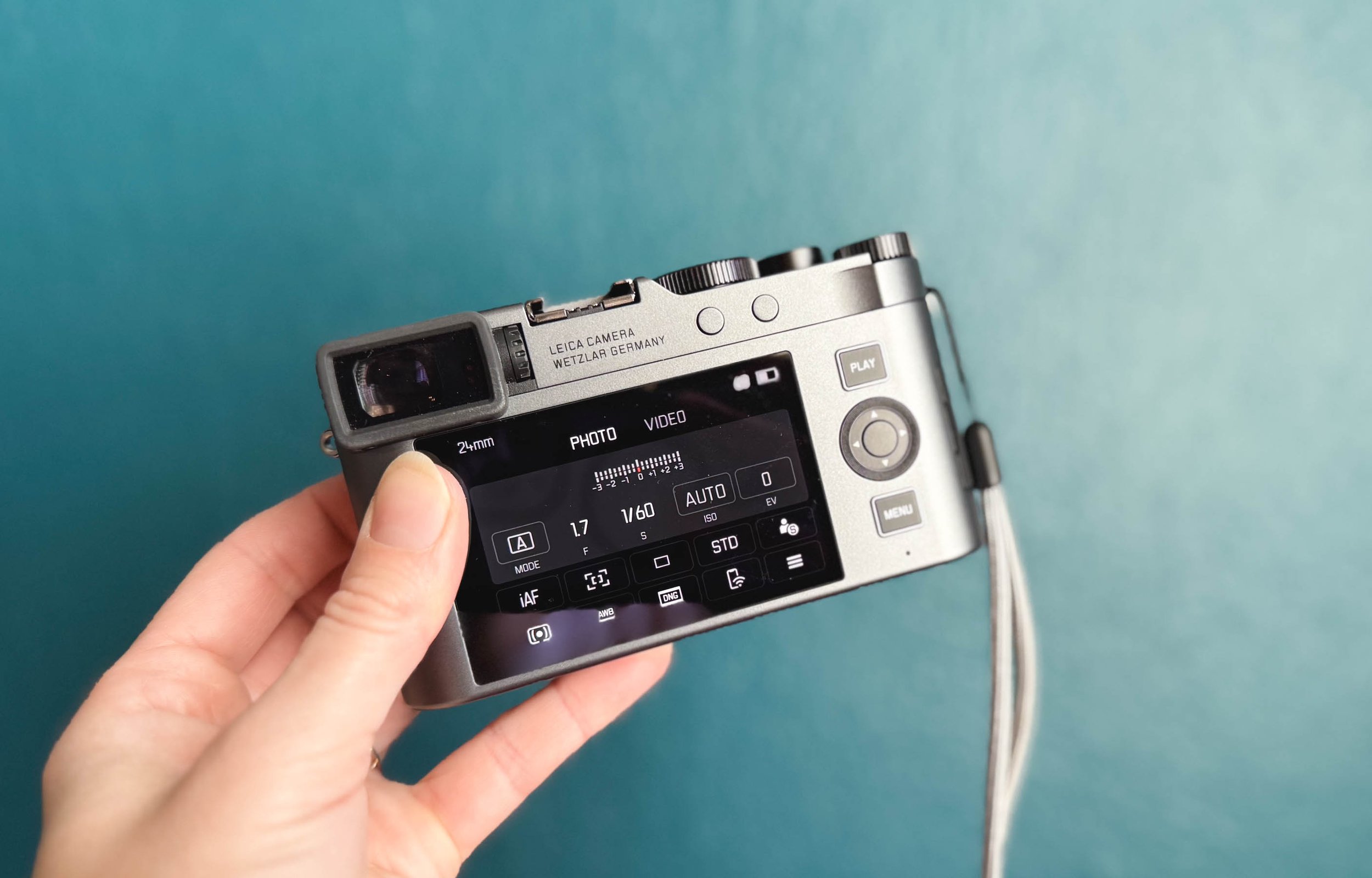
The one thing that really drove me crazy about the Ricoh GR IIIx, even though the photos were stunning, was the lack of ease I felt when trying to set the camera up for a shot. It just wasn’t intuitive right out of the gate like the Leica D-Lux 8 was. I’m actually genuinely impressed by how natural it felt right away. The buttons just felt like they were in the right place, I had no trouble finding things in the menu screen, and there wasn’t an excessive amount of buttons and dials that my fingers fumbled over. It just felt nice to use, which is a huge plus for me. I was surprised by this, especially because I’ve never shot with a Leica camera before. I was expecting there to be a learning curve, but there really wasn’t at all. Even though it’s a fancy camera, you don’t have to be fancy to use it and I loved that. It also turns on quickly, unlike the Sony RX100 VII, so you’re able to shoot quickly and not miss your shot. It seemed like the Sony RX100 VII took forever to turn on, which became quite frustrating the more I used it.
IT INCLUDES A POCKET-SIZED FLASH
Another thing I did not like about the Ricoh GR IIIx is that there was no flash. I find when I’m traveling that it’s much more convenient to have a flash because we’re likely out at night and I want to capture photos of friends and family without the images being too grainy. The Leica D-Lux 8 comes with a super cute tiny flash that just pops right into the hotshoe. It’s incredibly easy to attach and detach so there’s no frustration in that category. Sometimes a pop-up flash, like on the Canon G7X Mark II or Sony RX100 VII is more convenient, but I was still excited to see that it came with one. It can also be annoying when the flashes on the G7X Mark II or Sony automatically pop up in low light. With the D-Lux 8, the flash has a simple on-off switch so you’re in full control of that without flipping through a menu screen or turning dials to figure out how to turn off the automatic flash.
THE GORGEOUS DESIGN
Obviously, the Leica cameras are beautifully designed, but I was even more impressed when I got to hold it in my hands and try it out. Maybe it’s just all the hype around the brand, but it really did feel like a luxury experience. Sometimes I find Canon and Nikon cameras to feel so “utility” and honestly, masculine. I don’t feel that way with the Leica cameras at all. There was definitely a lot of careful thought and meticulous discussions over creating the D-Lux 8 and it shows. To some people who aren’t photographers, it probably just looks like another camera, but to me, it was truly exciting holding a camera that felt beautiful and not like a workhorse. I love all of the point and shoot cameras I’ve tried out because it’s so nice to shoot with something small and not bulky. But the D-Lux 8 was on another level. At the end of the day, it started to make sense why the brand is more expensive than others. The design quality kind of really does make all of the difference and that’s ok. You’d pay more for a nice pair of shoes, even if they served the same purpose as an ugly pair of shoes!
CREATIVE MODES
While it doesn’t offer as many creative modes as many of the other point and shoot cameras, I was surprised it offered any at all. I was kind of assuming they’d keep it simple, as sort of an “elevated luxury” effect, but it does include a few fun modes like miniature mode, one-point color, HDR and long-exposure mode. It also has built-in portrait, landscape, and nighttime modes to help speed up your shooting too. While I’d probably say the Ricoh GR IIIx wins in the creative mode category, it’s nice that the D-Lux 8 does offer some creativity for the more adventurous photographers.


CONS OF THE LEICA D-LUX 8
SENSOR SIZE
While the four-thirds sensor of the Leica D-Lux 8 isn’t the worst in it’s category, it’s not the best either. The Ricoh GR IIIx definitely wins in this regard too, with an APS-C sensor, but the D-Lux 8 stills beats out the 1-inch sensors on the Canon G7X Mark II and Sony RX100 VII. I guess I would think that with a luxury brand that they’d really go all out with the sensor size to be the “best”, but maybe that’s not really the goal. At that point, they’d have to increase the cost of the camera and they likely value the design and overall aesthetic of the camera over functionality. That’s the general argument when it comes to the Leica brand, and yes, you are likely trading some functionality for the design and build quality. However, it’s a nice medium ground when it comes to choosing a point and shoot camera in this category.
The camera is also a bit limited with only 17 MP photos, as opposed to the 24 MP you’d get with the Ricoh. Overall though, megapixels don’t always equal lower quality/less professional photos. If you’re not blowing up your images and printing them in huge sizes, you likely wouldn’t even notice the difference if you’re comparing them to the 20-ish MP of the Canon G7 Mark II and Sony RX100 VII.
NO MULTIPLE EXPOSURE MODE
This isn’t a deal-breaker for everyone, but for me it’s a huge factor when purchasing a camera. The Ricoh GR IIIx is the only camera that I’ve mentioned that does have a multiple exposure mode, so there’s another plus in my book for the Ricoh. However, I’m usually traveling when I’m using a point and shoot camera, and not so much focused on creating multiple exposures as I am when I’m at a wedding or a fashion shoot. So in general, I’m not really engaging the multiple exposure mode as often as I think I would when I’m using a point and shoot. I still think this camera offers a lot more that expected in terms of creativity, and the wide aperture of the lens truly enhances the ability to create truly stunning photos that look professional.

FINAL THOUGHTS
I went into this experience assuming the Leica cameras really would be overly hyped and way too expensive, but instead I walked away loving the camera and wanting to add one to my collection! It’s such a beautiful little camera and is a great jumping off point if you’re wanting to try out the Leica brand. Their cameras can get very expensive very quickly, but the D-Lux 8 is about $1900, and that’s honestly comparable to the other point and shoot cameras that are incredibly popular. Many of them, like the Canon G7X Mark II and Mark III, are so highly desired that the prices have gone up exponentially and are nearly impossible to find. I would recommend the D-Lux 8 simply because it’s actually available and really does keep up with the other cameras in this category. And in terms of video functionality, it’s near the top of the list with 4K video up to 30fps and image stabilization. The Sony RX 100 VII beats it out with some of it’s video features, but the D-Lux 8 is surprisingly capable in this regard.
Overall, I was expecting to steer people away from the Leica brand and say “it’s too expensive for what you’re getting”, but I truly don’t feel that way at all. You’re getting an incredibly gorgeous camera with ease of functionality, a bright, sharp lens and bragging rights amongst your photographer friends. Now, I feel like buying a fancier Leica camera is on my bucket list! If I love what this little point and shoot can do, I’ll probably love what the Leica Q3 or Leica SL3 are capable of. A girl can dream!
WHERE TO BUY THE LEICA D-LUX 8
(I always recommend B&H Photo because they have super fast shipping, great prices and amazing customer service!)
B&H Photo
Thanks so much for stopping by! I hope this helped you in your search for the perfect camera. If you’re looking for more camera recommendations, make sure to check out my post, the 10 Most Desired Mirrorless Cameras on the Market Under $2500 or the 15 Best Digital Cameras for Beginner Photographers Under $1500.
And make sure to check out my B&H storefront or Amazon storefront for more camera and film recommendations! And you should also consider signing up for my Patreon! For as little as $1 a month, you get early access to YouTube videos and photo sets I don’t post anywhere else. :)
Have a magical day!
-Myles Katherine