
This camera. It’s truly something special. When I was planning my trip to England for a 102-mile hike along the Cotswold Way National Trail, I knew I needed to pack light. As someone who is used to bringing at least six different cameras with me on my international adventures, it was a true challenge for me to limit myself in bag weight. When I was researching cameras for my trip and discovered the Samsung Evoca Zoom 115, I knew it absolutely had to come along for the journey. Not only was it incredibly small, it had all of the features I was looking for in a 35 mm camera, and more honestly. I still haven’t utilized this camera to it’s full potential, but all I can say is, this camera is 100% one of my favorite 35 mm point-and-shoot cameras I’ve ever used.

(By using the affiliate links and/or codes in this blog post, you help support Myles Katherine Photography. I may earn a small commission at no additional cost to you if you make a purchase through these links. Thank you for your support!)
HISTORY OF THE SAMSUNG EVOCA ZOOM 115
The Samsung Evoca Zoom 115 (also known as the Samsung Fino 115S) was originally released around 1997 and is part of a series of cameras produced by Samsung in the “Evoca” line. They’re known for being incredibly user-friendly, as most point-and-shoot cameras are, but included a ton of other features that made it considered a more “advanced” point-and-shoot for the time period, such as a panorama mode, DX film coding, and a surprising zoom lens. In modern day, this camera isn’t considered “rare” necessarily, but just generally isn’t really talked about. Personally, I’m completely confused as to why people aren’t scooping these up and treasuring them forever. BUT, this also means they’re super cheap at the moment, so get one pronto! You won’t be sorry!


MAIN FEATURES
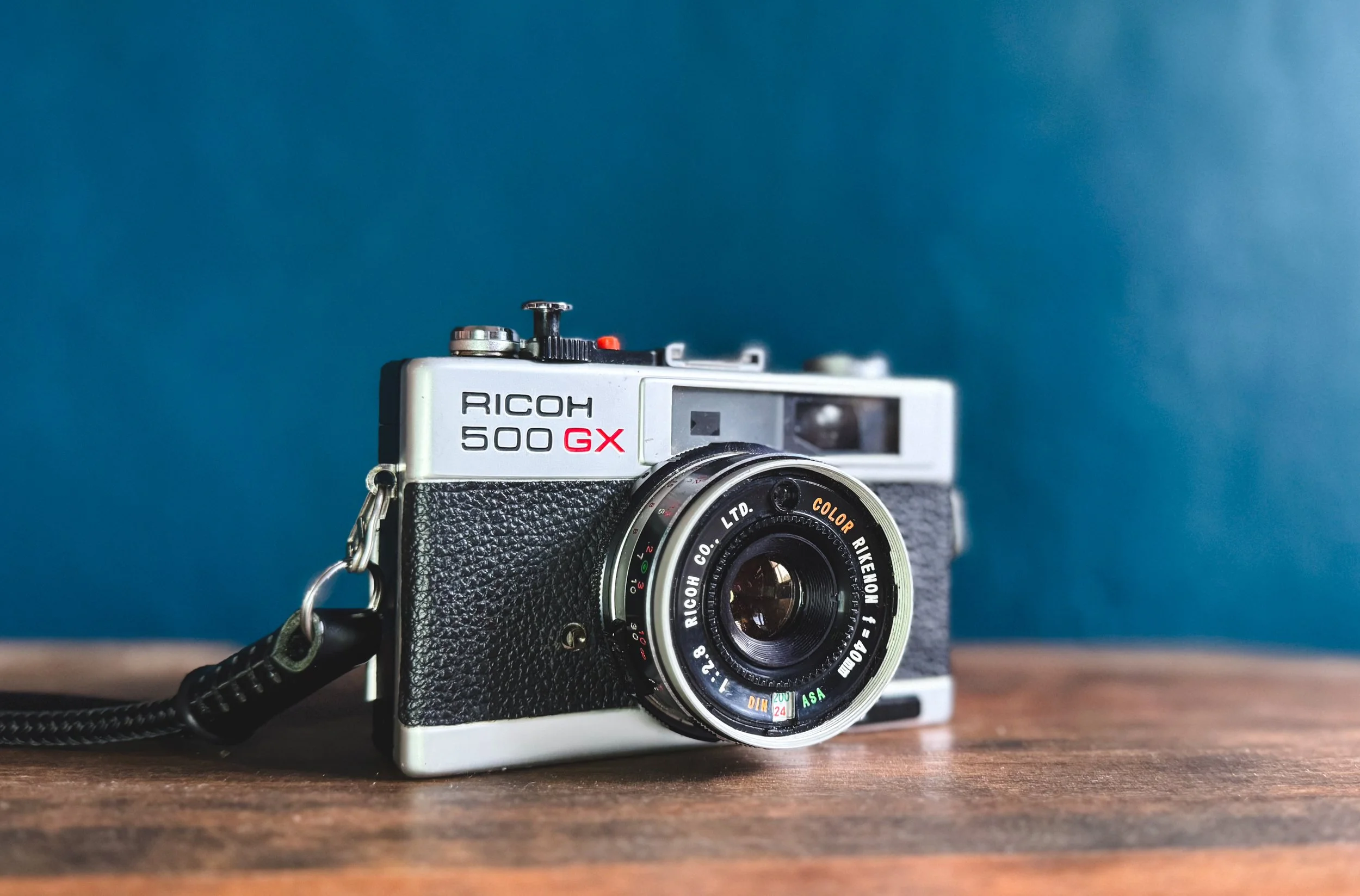
While the set-up of the camera is pretty basic, this camera has SO many different options for a point-and-shoot camera from the 1990s. When I was hunting for a tiny 35 mm camera for my long-distance hike, there were a few key features I was looking for: a flash, autofocus, a multiple exposure mode, a panorama mode, an affordable price, and a small, lightweight body. You’d be surprised at how difficult it is to find a camera that fits all of these categories, but the Samsung Evoca Zoom 115 does! These days, I’ve become very picky with my cameras, or maybe it’s just that I know what I want now, but when I found the Samsung Evoca Zoom 115, I immediately knew it was perfect. And I’m not going to lie, the fact that it only cost me $23 on eBay was a major win in my book. I had already spent so much money planning for our hike and I had also already purchased a more expensive 35 mm, the Ricoh 500GX (I have a full blog post about this camera here!) which was meant to be my more “fancy” camera I was bringing on the trip. I just knew I wanted a camera that I could use quickly and easily, without too much fuss. A point-and-shoot camera is perfect for travel because it doesn’t require a lot of set-up and is essentially ready to go at all times. I ended up using the Samsung Evoca the most out of all of my cameras I brought on my trip because it was just so simple and convenient to shoot with.
The Samsung Evoca Zoom 115 really does have endless settings you can experiment with. As I mentioned before, it has a panorama mode that you can switch between while shooting a roll of film, which is a setting I learned to love after using my Pentax IQ Zoom 140M (read more about that camera on my blog here!). The multiple exposure setting is super easy to switch to, which is super important to me — there is a mode button that you press that will take you through 8 different settings such as bulb mode, portrait mode, sports mode, and of course, a multiple exposure setting. It also includes a “fuzzy” mode, which is a fancy intelligent mode that helps gauge the lighting and your subject to create the best image for your surroundings. The “interval” mode allows you to take photos over a certain amount of time up to 60 minutes to capture things such as sunsets or motion. A “step” mode lets you take up to 3 photos of your subject at different focal lengths. I haven’t experimented with all of these modes yet, but it will be fun to try them out!


Then of course, the camera has exposure compensation, red-eye reduction, fill-flash, backlight control, a slow sync flash setting, self-timer, a macro setting, an infinity landscape setting, and pretty much everything else you can think of. I honestly can’t think of a single other setting that it needs. And if you need more in a point-and-shoot camera, then you probably are looking for a camera that is not a point-and-shoot. This is the ultimate point-and-shoot 35 mm camera, in my opinion.
Oh, and you can’t forget it’s crazy 38mm-115mm f/4.1-10.9 zoom lens! Obviously, I wish that the lens had a bit of a wider aperture setting, but for a camera that only costs $23 I’m perfectly content with an f/4.1 lens when it’s a point-and-shoot camera.

THOUGHTS AND OPINIONS
In case you haven’t guessed it yet, I LOVE this camera. As I’m sitting here writing about it, it’s glistening in the fall sunlight on my desk. It has a beautiful, sturdy body with a fun, snappy lens covering that you slide to turn the camera on, a shiny silver-y gold glow, and a roll of film containing photos from my sister’s birthday yesterday. I love vintage cameras so much because of the nostalgia they represent and the classic 1990s aesthetic of 35 mm photography. As a child born in 1989, I miss the 90s and I remember the cameras that my parents used to use so vividly. I’ve always loved cameras, and the Samsung Evoca Zoom 115 did not disappoint. In terms of sharpness of the images, I’m pleasantly surprised. As with most 35 mm point-and-shoot cameras, I recommend shooting with a film with a low ISO so you can get the sharpest images possible - like Kodak Gold 200, Kodak Portra 160, or Lomography Color Negative 100. I’m not always expecting much from point-and-shoots (which is why the Ricoh 500GX was my “fancy” camera for the trip, because it’s known for it’s sharpness) but, much like the Pentax IQ Zoom 140M, the Samsung Evoca Zoom surprises me with it’s sharpness and clarity. Especially because I’m typically on the move when I’m shooting with it, wandering through busy streets or trying to capture something quickly. You would think all of my images would be blurry and ugly and terrible, but somehow, this little camera captured my trip to England perfectly. I’ve already taken it with me on a handful of other adventures, and I’m sure it with go with me a lot more in the future. :)
WHERE TO BUY THE SAMSUNG EVOCA ZOOM 115
Etsy
CHECK EBAY LISTINGS
WHERE TO BUY THE SAMSUNG FINO 115S
Etsy
CHeCK EbAY LISTINGS
35 MM FILM RECOMMENDATIONS
Kodak Portra 160
Kodak Portra 400
Kodak Gold 200
Lomography Color Negative 100
Neopan Across 100 II (black and white)
Kodak T-Max 100 (black and white)
If you’re looking for more 35 mm film recommendations, you can read more about my favorite black and white film stocks here or my favorite color 35 mm film stocks here!
If you found this post helpful or inspiring, I’d love it if you considered signing up for my Patreon! For as little as $1 a month, you’ll get early access to all of my YouTube videos, plus tons of photos that I don’t post anywhere else. Depending on which tier you choose, you could also receive seasonal prints and/or discounts! I always use all of the proceeds towards cameras, film & processing.
If you have any questions, I’m always happy to help! You can contact me here, or leave a comment below! Thanks so much for stopping by! You can also check out my B&H Photo storefront & Amazon Storefront for more camera/film recommendations. :) Have a magical day!
<3 Myles Katherine
P.S. I have a full YouTube video about this camera too! Check it out below!